Train
Training programs built around the half-second your foot spends on the ground
28 complete blocks — speed, vertical jump, agility, rotational power, foot and ankle resilience, balance after 55, and a full off-season plan. Every one names the number it moves, the phases it runs in, and the tests that decide whether it worked.
- 28
- Programs, free to run
- 85
- Written training sessions
- 2x+
- Force to displace an athlete on Springsoles (Weber State)
- 4
- U.S. patents behind the platform
Start with the number you want to move
Pick one goal
One block at a time. Each program targets a single measurable outcome — a 40 time, an approach jump, a shuttle, a sit-to-stand count.
Test in week 1
Record the tests listed on the program before you train a single session. An untested block is an opinion.
Keep the surface constant
Same shoes, same surface, Springsoles installed from week 1 to final testing, so the only variable left is your training.
The program library
Focus
Sport
Showing 28 of 28 programs

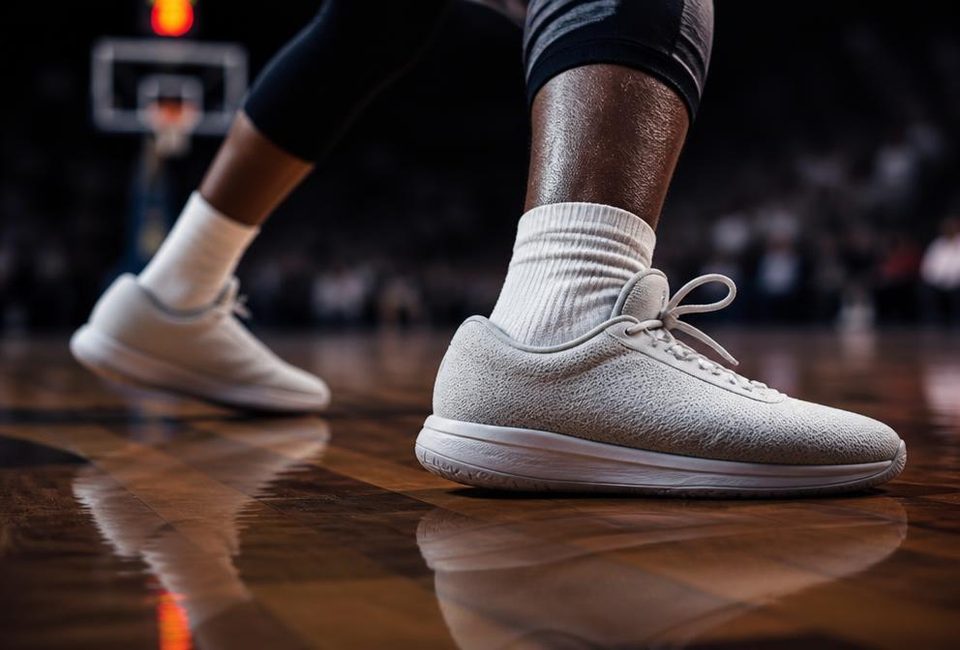
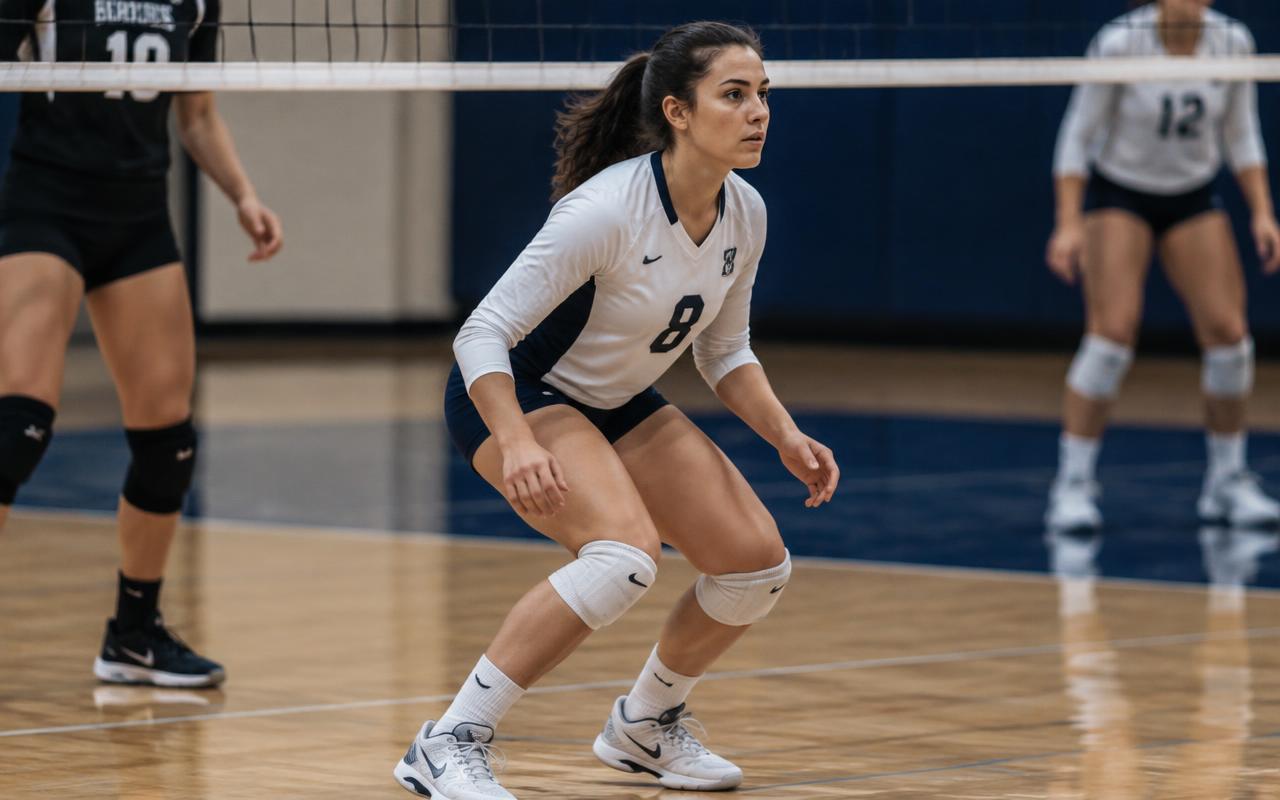
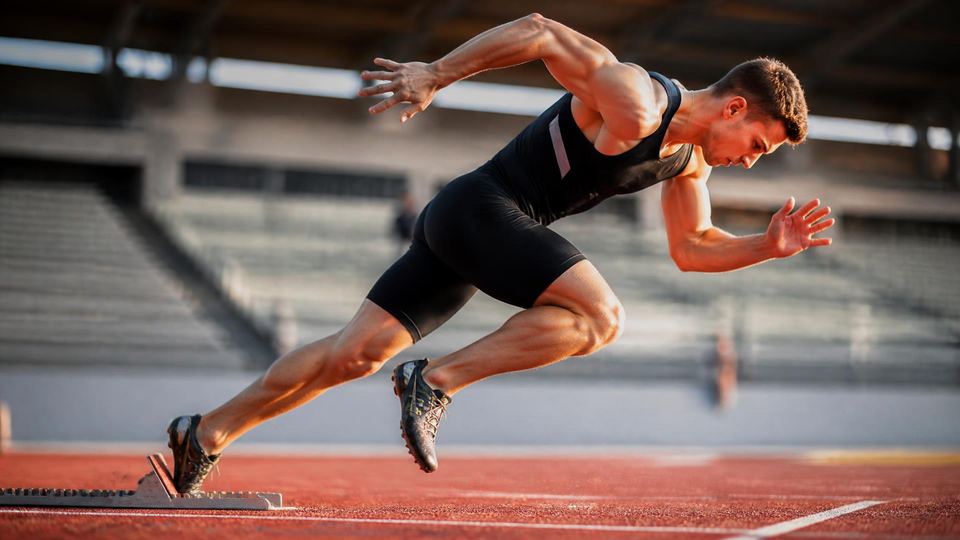

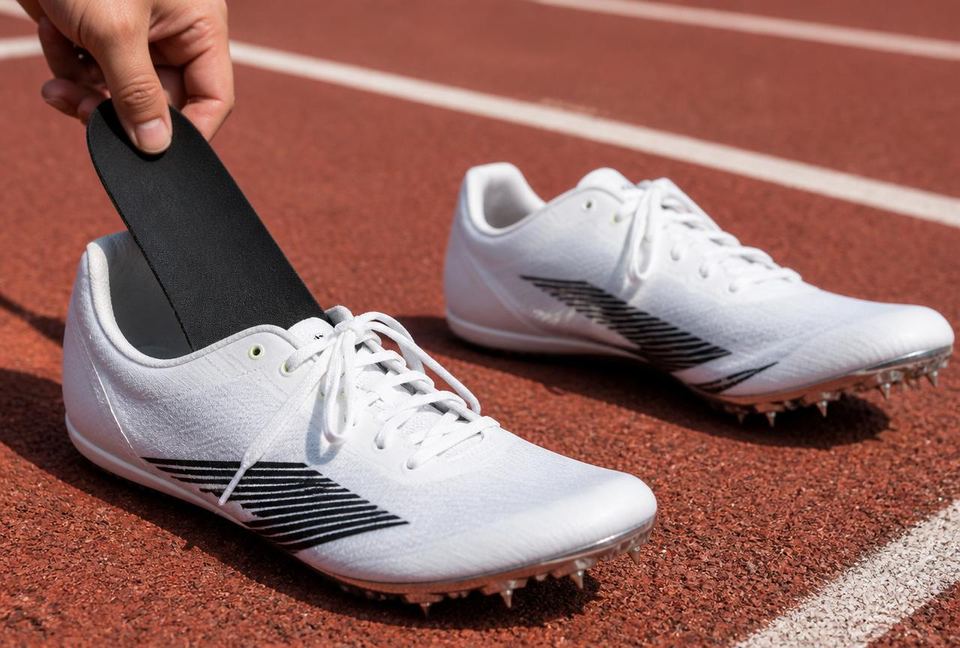
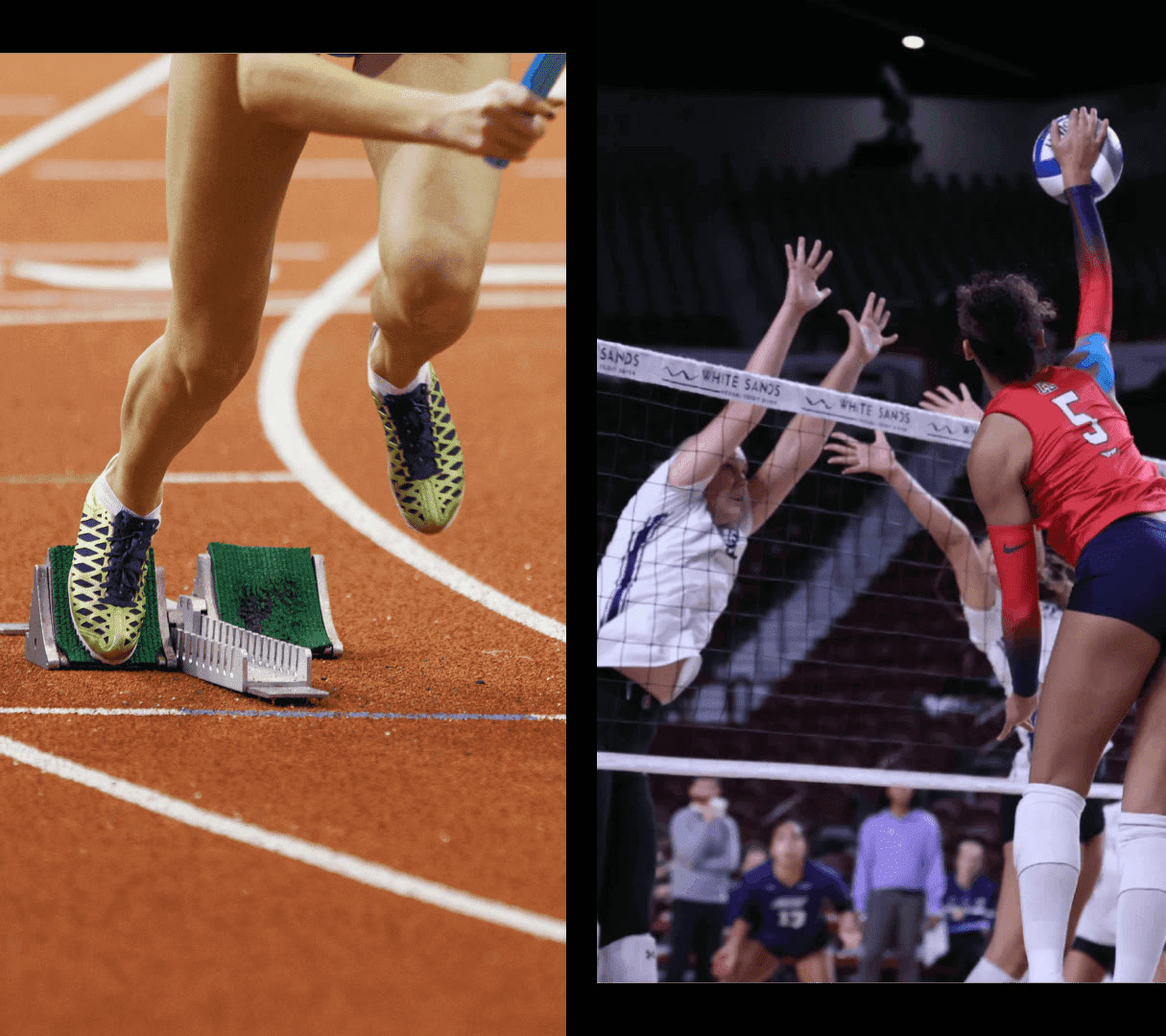

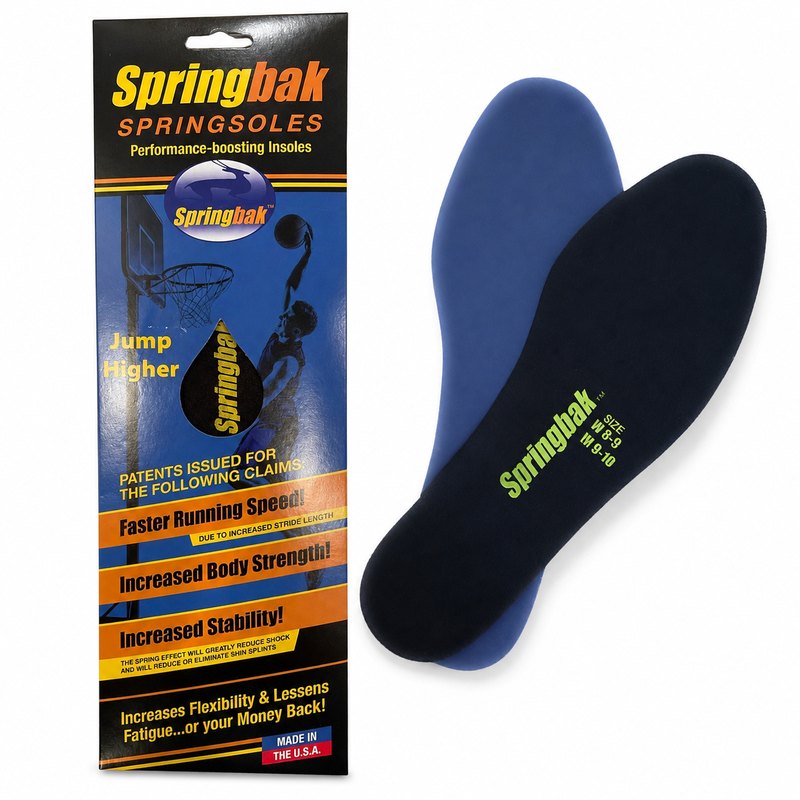










Compare
Not sure which block to run?
Select up to four programs with the Compare button on any card and read their phases, tests and gear side by side.
Watch
Why every block starts at the ground
Two films from the Springbak® archive. The first shows how the patented material works under an athlete's foot through running, jumping, lifting and cutting. The second, filmed at Northstar Studios in Nashville, opens with BYU track and field head coach Mark Robison and follows six years of R&D with the athletes, coaches and researchers who tested it.
See the Springbak® Difference in Action
How patented Springbak® technology is designed to work beneath the athlete's foot during running, jumping, lifting, and cutting.
Chapters
Read the transcript
- 0:00
- What Springsoles are. Opening look at the Springsole itself: a 3/32-inch patented energy-return layer fitted under a removable liner or on top of a firmly bonded or stitched liner.
- 0:55
- Energy return under the foot. How the patented material loads on ground contact and gives that stored energy back into the next push-off, instead of absorbing it the way soft foam cushioning does.
- 2:10
- Sprinting, jumping and cutting. Athletes running, jumping and changing direction, with the ground-contact phases where a sprinter or jumper is asking the most of the shoe.
- 3:35
- Install and fit. The install shown uses a removable liner: first try the Springsole untrimmed, then lift the liner, place the Springsole underneath and reinstall the liner. Trim only the toe or forefoot in very small amounts if needed for a flat fit.
The Springbak® Legacy Film
Filmed at Northstar Studios in Nashville: founder Bill Crow's vision, six years of R&D, and the athletes, coaches and researchers who tested it.
Chapters
Read the transcript
- 0:00
- Coach Mark Robison, BYU track and field. The film opens with BYU track and field head coach Mark Robison on what he saw when his athletes trained and competed in Springsoles.
- 1:10
- Bill Crow and the original idea. Founder Bill Crow on the idea behind Springbak®: put a thin spring plate under the foot so the athlete gets energy back from every step rather than losing it into the shoe.
- 2:40
- Six years of R&D and lab testing. The development years — material iterations, and the university lab work behind the balance, stability and stride-analysis results published on the proof page.
- 4:00
- Coaches and athletes on the result. Coaches and athletes who tested Springsoles across track and field and other sports describe what changed in training and competition.
Patents · force plate tested
The platform under every program
More than twice the force
Force plate testing at Weber State University found athletes wearing Springsoles required more than twice the force to be displaced from a standing position.
Read the balance study →Four U.S. patents
5,554,694 · 5,695,850 · 6,120,880 · 6,589,630 B1 — performance-enhancing athletic shoe components and the methods behind them.
Read the patent family →3/32 of an inch
Thin enough to fit under a removable factory liner or on top of a firmly bonded or stitched liner in a spike, court shoe or walking shoe.
See how it installs →Force-Plate Stability Study
In force-plate testing, subjects standing on Springbak® Springsoles showed more than twice the overall resistance to being pushed from their position.
In plain English: they were harder to move. They could hold their ground better against a sideways push—exactly the kind of stability athletes need when planting, cutting, jumping, landing, and absorbing contact.
Springbak® gives the foot a more stable, responsive platform to work from inside the shoe.
Results are from the force-plate testing described in U.S. Patent No. 6,589,630 B1. Individual results vary.
Training program questions
Which Springbak® training program should I start with?
Pick the block that names the number you want to move. If you want a faster 40, start with Speed & Acceleration. If you want inches, start with the Vertical Jump Block. If you are in a competitive season right now, run In-Season Strength and wait for the off-season for the rest.
Can I run two programs at the same time?
Run one primary block at a time, and only stack Foot & Ankle Resilience alongside it — that block is deliberately low-fatigue. Everything else competes for the same recovery.
Do I need Springsoles to use these programs?
No. The programs stand on their own. Springsoles matter because every block is built around ground contact: install them before week 1 and keep them in through final testing so every number you record was set on the same platform.
How often should I retest?
Test in week 1, at the mid-block checkpoint listed on each program, and in the final week. Testing more often than that measures fatigue, not progress. Log the numbers in the athlete tools.
Are these programs appropriate for high school athletes?
Yes, with a coach supervising the barbell work. Each block lists a level; where a program is written for collegiate athletes, cut the weekly volume by a third for high school and keep the intensity.
What is the research behind the Springbak® guidance in each program?
Force plate testing at Weber State University found athletes wearing Springsoles required more than twice the force to be displaced, and a treadmill stride analysis at USC examined stride mechanics. Both studies, and the four U.S. patents behind the design, are documented on the proof page.
Install once, then run the block
One pair, made in the USA. Fit them according to each shoe’s liner type before week 1 and log every test in the athlete tools.