
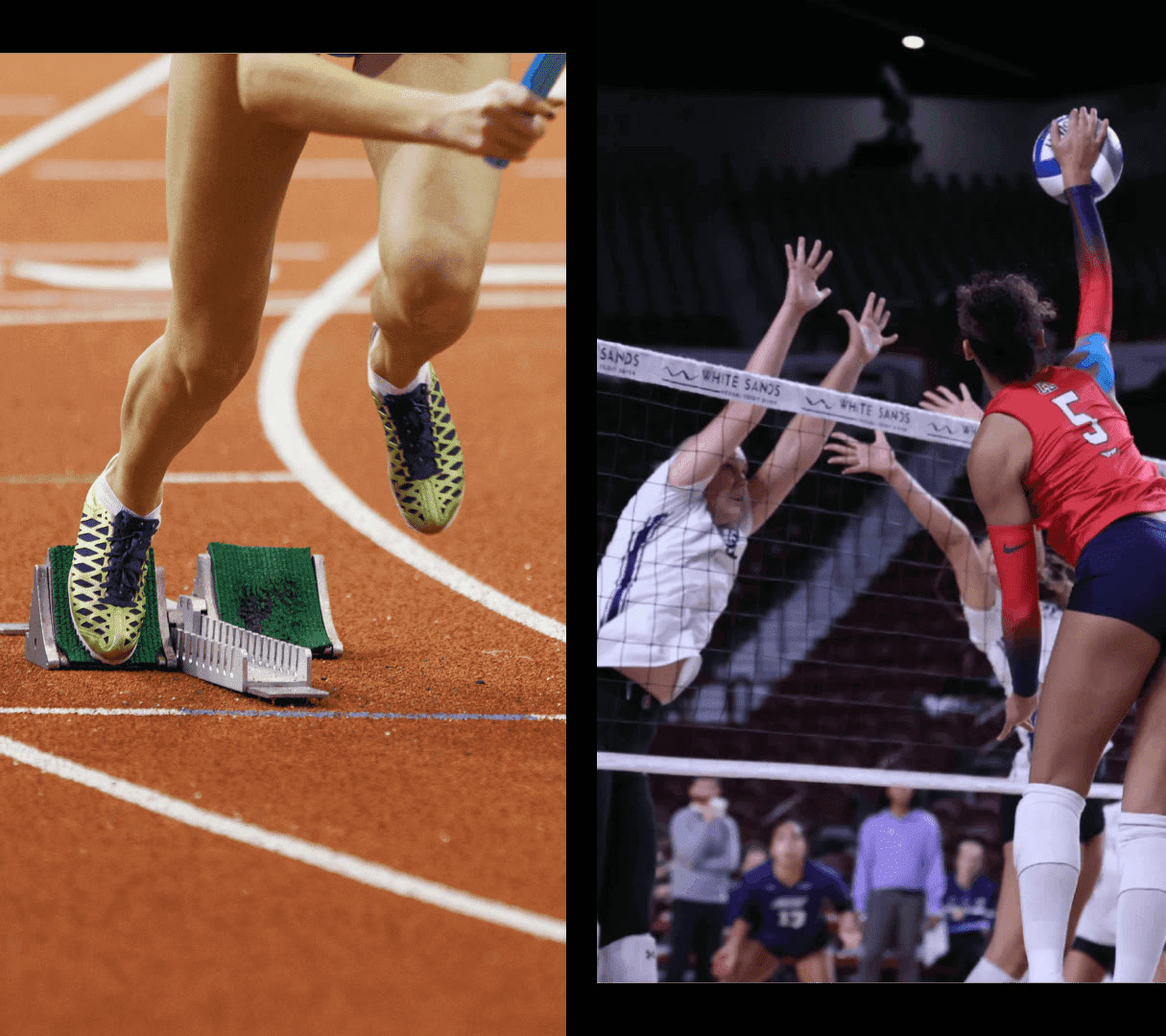
Watch any game long enough and you will see the same story told in slow motion. Early on, the athlete is compact and quiet. By the fourth quarter the arms are wider, the feet are noisier, the landings are flatter. Nobody got weaker. The mechanics got expensive.
Fatigue is a technique problem before it is a fitness problem
As fatigue builds, the small stabilizers quit first. The body compensates with bigger, sloppier movements that cost more energy — which produces more fatigue. That loop is where late-game mistakes actually come from.
- Ground contact time lengthens — you spend longer in the slow part of every step.
- Foot strike drifts wider, bleeding force sideways instead of forward.
- Landings lose the knee-tracking discipline you own when you are fresh.
Train the last rep, not the first
Put your technical work after your conditioning once a week, not before it. Film the final set, never the opener. If your form only holds when you are fresh, you do not own it yet.
A stable, low-profile foundation beneath the foot supports efficient movement and body control deep into a session — which is exactly when it matters and exactly when most equipment stops helping.
Put it beneath your feet
Springbak® Springsoles — 3/32nds of an inch. Try untrimmed; trim the toe or forefoot only if needed.
Shop SpringsolesKeep reading
Related reading

All Sports · Mechanics
What the Patents Actually Cover
Four U.S. patents, six years of development, and one material claim worth understanding before you buy anything for your feet.
6 min read

All Sports · Speed
The Thirty-Yard Repeat
One fast sprint is a talent. Twelve fast sprints in a row is a trained quality — and it is the one that shows up on Friday.
4 min read

Track & Field · Mechanics
Touchdown and Takeoff: The Two Hardest Contacts in Track
A hurdle touchdown lands and re-accelerates in the same instant. A jump takeoff converts a full approach in one plant. Both are decided by what happens under the foot.
7 min read

Track & Field · Mechanics
Insoles for Track Spikes: Why Yours Does Not Come Out
The footbed in a sprint spike is a pad sewn into the shoe. Here is how to add a responsive layer without wrecking pin angle, heel height or plate feel.
7 min read
- 1.What the Patents Actually Cover· All Sports
- 2.The Thirty-Yard Repeat· All Sports
- 3.Touchdown and Takeoff: The Two Hardest Contacts in Track· Track & Field
- 4.Insoles for Track Spikes: Why Yours Does Not Come Out· Track & Field