Springbak

Train · Compare

Compare training programs side by side

Pick up to 4 blocks and read their goal, phase structure, testing protocol, gear list and weekly sessions in one view. Then commit to one block at a time.
Browse all 28 programs
Side-by-side comparison of 4 Springbak® training programs
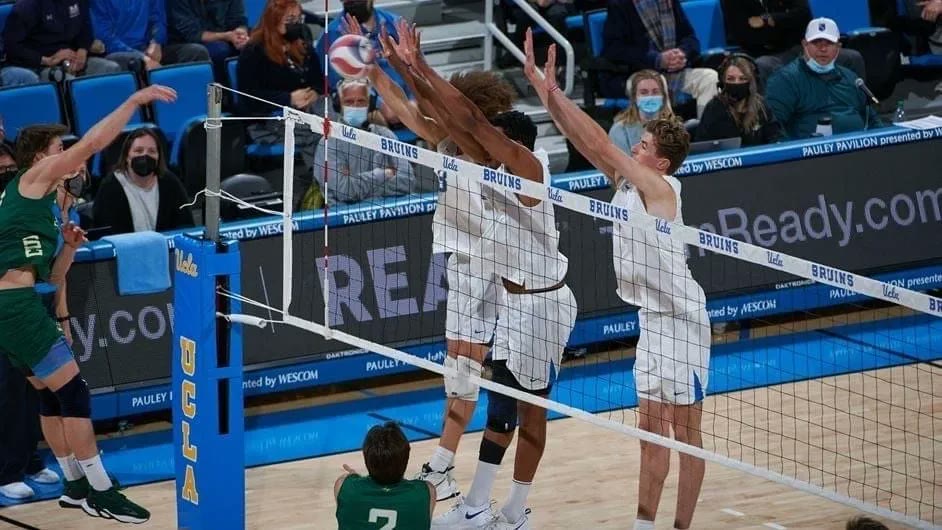
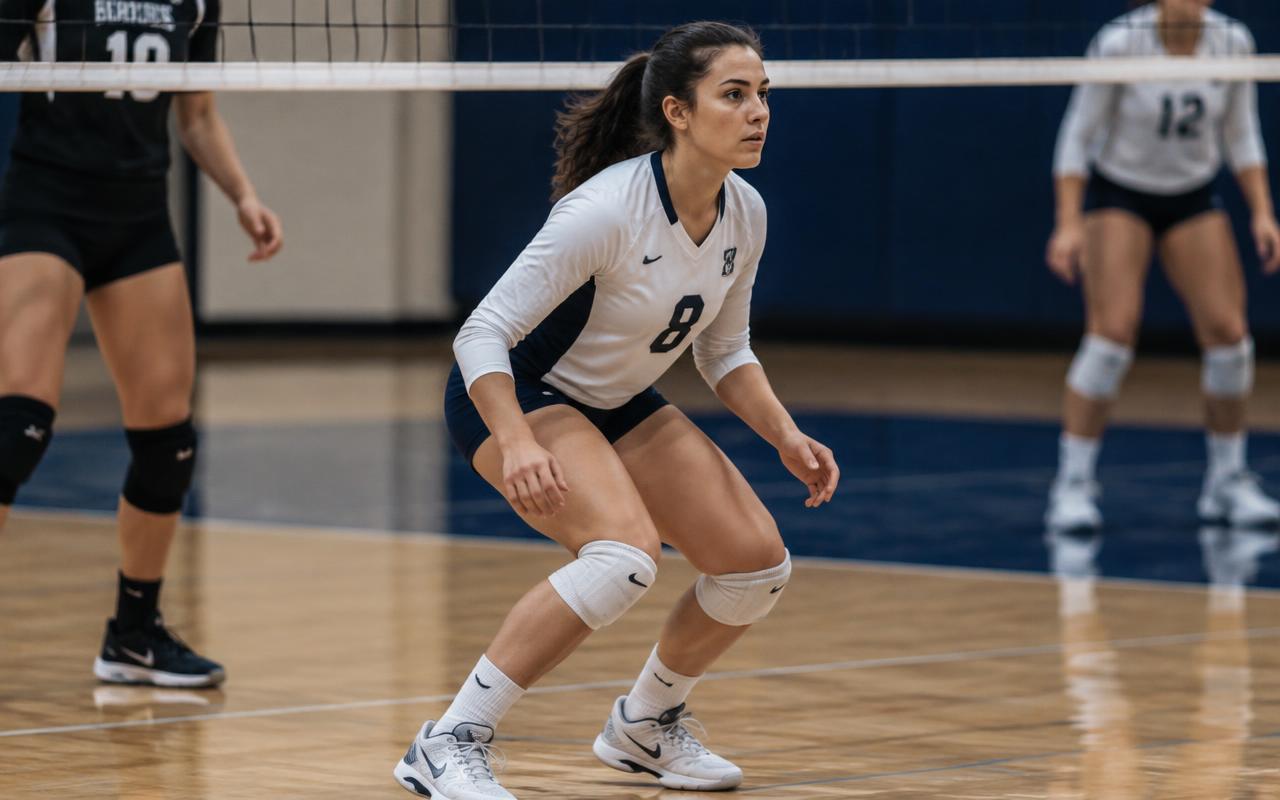
Basketball guard sliding to cut off a driveFirst-Step QuicknessAgilityVolleyball players at the netIn-Season StrengthStrengthBasketball player rising for the ballVertical Jump BlockJumpVolleyball players blocking at the netVolleyball Jump DurabilityJump
The goal

Beat your defender off the first two steps — measured by a faster 5-yard and 5-10-5 shuttle.

Hold off-season strength through a full competitive season with no drop in game-day legs.

Add 2-4 inches to approach vertical through force production and a stable plant.

Hold approach jump height from set one to set five, with no drop-off in the back half of the season.

Length

4 weeks · 3x / week

12 weeks · 2x / week

8 weeks · 3x / week

8 weeks · 3x / week

Level

High School

Collegiate

All Levels

Collegiate

Sports

Basketball · Soccer · Football · Pickleball

Strength · Football · Basketball · Volleyball · Golf

Basketball · Volleyball · Track & Field

Volleyball · Basketball

Phases
  1. Week 1 · Week 1Planned starts. Learn the push-off angle before adding reaction.
  2. Weeks 2-3 · Weeks 2-3Reactive starts on a call, a ball drop or a defender's hip.
  3. Week 4 · Week 4Live one-on-one constraints, then retest 5-yard and shuttle.
  1. Weeks 1-4 · Early seasonFull loads, two sessions, both inside 40 minutes.
  2. Weeks 5-9 · Mid seasonDrop to one heavy day plus one maintenance day in congested weeks.
  3. Weeks 10-12 · ChampionshipIntensity only. Three exercises, two sets each, bar speed decides the load.
  1. Phase 1 · Weeks 1-3Build force. Heavy, low-rep bilateral strength with quiet landings.
  2. Phase 2 · Weeks 4-6Make it fast. Olympic derivatives, approach jumps, reactive hops.
  3. Phase 3 · Weeks 7-8Cut volume by half and let the jump express itself. Retest in week 8.
  1. Phase 1 · Weeks 1-3Landing mechanics and posterior chain capacity. Volume low, quality absolute.
  2. Phase 2 · Weeks 4-6Repeat-jump capacity — clusters that look like a long rally.
  3. Phase 3 · Weeks 7-8Taper and retest jump one versus jump ten.
Tests
  • 5-yard dashFrom your sport stance, two attempts, best time.
  • 5-10-5 shuttleBoth directions, full recovery, best of two per side.
  • Deceleration controlSprint 10 yards, stop in two steps. Count steps, not time.
  • Trap bar 3RMWeek 1 and week 12 only. Holding the number is a win.
  • Standing verticalOnce a month, same day of the week, before practice.
  • Session readinessRate legs 1-10 at warm-up. Two 4s in a row means cut the day in half.
  • Standing verticalNo step. Best of three, same surface, same shoes.
  • Approach verticalYour normal approach. Best of three, weeks 1, 4 and 8 only.
  • Depth-drop contact qualityDrop from 12 inches and stick. If landings are loud, hold the phase.
  • Approach jump — freshBest of three, at the start of a session.
  • Jump 1 vs jump 10Ten approach jumps on 15s. Compare first and last. Under 5% drop is the target.
  • Single-leg hop and stickThree per leg. Any wobble means keep phase 1 going.
Gear
  • Cones
  • A partner or coach for cues
  • Stopwatch
  • Hard court or turf
  • Barbell and rack
  • Trap bar
  • Cable or band
  • Box
  • Barbell and rack
  • Trap bar
  • Vertec or wall-mark
  • 12-24" box
  • Barbell
  • Bands
  • Box
  • Wall-mark or Vertec
The week
  • Day 1: Planned starts (4 drills)
  • Day 2: Deceleration (4 drills)
  • Day 3: Reactive (4 drills)
  • Day 1: Lower push + power (4 drills)
  • Day 2: Posterior + upper (4 drills)
  • Day 1: Heavy force (4 drills)
  • Day 2: Rate of force (4 drills)
  • Day 3: Single-leg control (4 drills)
  • Day 1: Landing and eccentric (4 drills)
  • Day 2: Repeat jump capacity (4 drills)
  • Day 3: Single leg and shoulder (4 drills)
Springbak® note

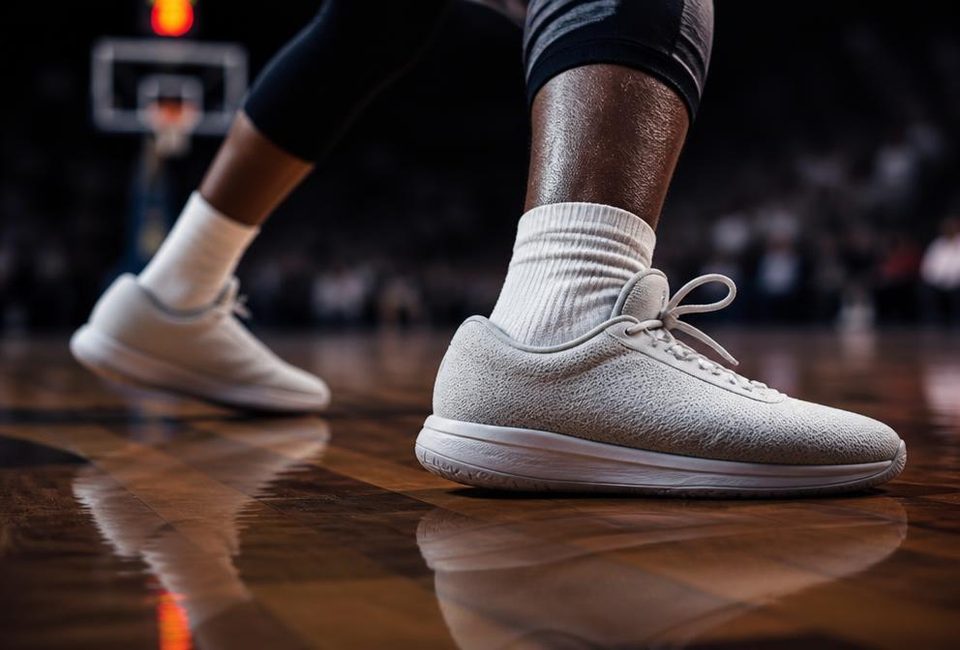
The first step is one violent ground contact against a hard floor. Springsoles sit 3/32 of an inch under your existing insole, so your shoe fit and feel do not change while the platform underneath does.

In-season, your total ground contacts are set by practice, not by your program. A stable, ultra-thin platform beneath your foot supports body control through the contacts you never count.

Force plate testing at Weber State found athletes wearing Springsoles required more than twice the force to be displaced — stability at the plant is what turns strength into height.

Every approach ends in a hard plant on a wooden floor. Weber State force plate testing found athletes wearing Springsoles required more than twice the force to be displaced — that stability is what protects a plant leg on jump ninety.

Open programOpen programOpen programOpen program

Same platform for every test

Whichever block you pick, install Springsoles before week 1 and leave them in through final testing so the only variable left is your training.

Shop Springsoles

The receipts

Patented. Force plate tested.

See the patents and the studies

Patents

  • 4

    U.S. patents

    Nos. 5,554,694, 5,695,850, 6,120,880, 6,589,630 B1 — performance-enhancing athletic shoe components and methods.

    Read the patent family

Force plates

  • 2×+

    Force to displace

    Force plate testing at the Weber State University Human Performance Laboratory: more than twice the force was needed to push subjects off balance on Springsoles.

    See the force plate data
  • Balance

    & stability study

    Evaluated with Dr. Michael Yessis, Dr. Robert Wiswell and Howard Gray, PhD — stability and functional strength, measured rather than claimed.

    Read the study